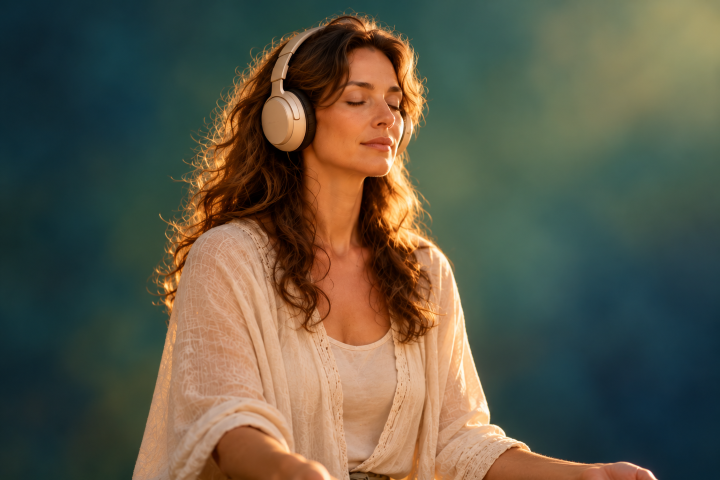
This is how much emotions affect heart health
Anyone who has experienced it knows: a broken heart really exists. Because emotions have a big influence on your heart; the center of your body and your soul.
Do you want a healthy heart, a heart that can receive and give love? Then it is important that emotions do not get in the way. Unfortunately, for many people, emotions start to play tricks on the heart, both physically and lovingly.
Fortunately, more and more is known about the effect of emotions and sadness on heart health. Because that influence is greater than we would initially think.
An open heart
In the book ‘Heart: A History’ by cardiologist Sandeep Jauhar, in addition to the history of important milestones and developments such as open-heart surgery and heart transplants, emotional factors are discussed. Jauhar believes that more attention should be paid to the influence of emotional factors on the development of heart disease. Think, for example, of an unhappy marriage, poverty and work stress. When he himself started having problems with the functioning of his heart due to stress, Jauhar decided to do further research on this complex subject.
Broken heart syndrome
The link between heartache and health problems is not new. A century ago, scientist Karl Pearson discovered something remarkable while studying tombstones. He noticed that married partners often died less than a year apart.
Today, numerous studies show that stress and despair do indeed affect physical health, especially in people with heart problems. The best-known example is Tako Tsubo syndrome or cardiomyopathy, also known as broken heart syndrome. In this case, the death of a loved one or another major event weakens the heart muscle, causing the heart to mimic symptoms of a heart attack.
Other studies showed that people who are socially isolated or who experience chronic stress from relationships or work are more prone to heart attack or stroke. Yet the role of our emotional health still receives too little attention in heart health, Jauhar tells the New York Times. He advocates that health organizations recognize emotional stress as a risk factor for heart disease. According to the cardiologist, the fact that this has not yet happened is due to the fact that it is simply much easier to focus on cholesterol, for example, than on emotional and social disruption.

We live too much from emotions, not from the heart
Since writing the book, Jauhar has increasingly focused on stress-reducing habits such as yoga and meditation, spends more time with his family, and is better able to understand his patients.
A lot of people assume that (their) emotions come from the heart. Some actual ’emo people’ think that their emotional experience and their emotionally driven behavior means that they live from their heart. And that is a serious misconception. Emotions are a ‘product’ of the brain! All the time. In fact, emotions play their role at the level of the lower brain. You’ve heard of the emotional brain, haven’t you? The word says it all. There is a big difference between pleasing, affection, affection on the one hand and love on the other. But a lot of people confuse those concepts. Love is not an emotion but it is a quality and expression of spirituality. Love is always unconditional and is placed from the heart ‘above’ everything that is going on in the brain over human nature. The emotions that can be triggered in us by certain circumstances around (real) love are completely separate from that love itself; Those feelings, those emotions are secondary and come from our brain and are never about (real) love but about circumstances and about our ego: the fulfillment of our needs, need for…, desires, pleasant feelings, I want… Real, unconditional love doesn’t want anything, it is.
Continue reading the very nice article about this by Paul Jansen: Emotions come from the Brain, not from the Heart
.Many people will also recognize themselves in the following relationship scene: man and woman are talking to each other. It’s about a personal issue, small, but still a pebble in the shoe. Talking can be dangerous and make the wounds deeper,… Without realizing it, words have fallen that hurt the other. Something arises on a heart level and emotional level. One is hurt, sad, does not feel understood and/or accepted, and the heart closes for a moment. Love encapsulates itself back. After all, one cannot open oneself. A pure emotion lasts 90 seconds.
If we haven’t learned to deal with emotions, the following happens. The next day, the person still remembers the conversation, feels the hurt emotions. Thoughts now take over and keep repeating the scenario. In consciousness, the story becomes more painful and worse, the emotions repeat themselves constantly and are a plate on which the grooves are dug deeper and deeper into the brain through repetition. Emotions are stored in our cell memory, repetitive thoughts only confirm the situation even stronger… and the heart remains closed. Just by… repetition… Through memory, the activity of the brain, which usually lives in the foreground for all of us.
From the navel to the brain
One more thing. The quality of the mind has changed. In Patanjali’s time, in the past, the center of the human personality was not in principle the brain; it was the heart. And before that, it wasn’t even the heart. It was even lower, near the navel. In the time before Patanjali, before Patanjali, it was the navel – the center of the human personality. Thus, hatha yoga developed methods that were useful and meaningful to the person whose personality center was the navel. Then the center became the heart. When the center became the heart, only bhakti yoga could be practiced, nothing else. So Bhakti yoga developed in the Middle Ages – never before – because the center changed. And a method has to change depending on the people to whom it is applied. “Now even bhakti yoga is no longer relevant. The main center is further away from the navel. Now it’s the brain.” *1
As these changes occurred, more and more meditators found that they had difficulty forcing their bodies to stop, or staying in a fixed position, with potentially dangerous consequences. For modern people, whose center is furthest from the navel, the problem becomes even more acute…
“All religions in the world have taught people to do something: stop the thought process, force the body to a silent posture. That’s yoga – a long-term practice to force the body to be still. But a forced body is not silent. And all the prayers, concentrations, and contemplations of all religions do the same thing to the mind: they force it, they do not allow the mind to move. Yes, you have the ability to do it. And if you persevere, you may be able to stop the thought process. But this is not real, it is absolutely fake.”
That’s also Vipassana, sitting completely still, not moving. And observe what is there. But many people can’t sit still. Forced sitting still becomes a problem. It’s a simple psychology: you’re not prepared, you haven’t done your homework, and you’ve started a job that requires a huge background of experience.
“When you dance insanely, the opposite happens inside you. With a crazy dance you start to become aware of a still point in yourself; With sitting still, you begin to become aware of madness. The opposite is always the point of consciousness. With your mad, chaotic dance, with your crying, with your chaotic breathing, I allow you madness. Then you begin to become aware of a subtle point, a deep point within yourself that is still and motionless, as opposed to the madness at the edge. You will feel very happy; There is an inner silence in your center. But if you only sit, then the inner silence is the madness; You’re quiet on the outside, but on the inside you’re insane.” *2
"Vipassana comes at the end; you can't start with Vipassana."
Osho
From the brain to the heart
Because the centers of modern humans are now in the brain and farther from the sea than ever before, as was the case in the past, you need a different method.
We then use chaotic methods because chaotic methods shut down the brain. It has nothing to do. The brain cannot carry out checks, follow a systematic program or analyze things. The method is so chaotic that the center is automatically pushed from the brain to the heart, and that is a big step! If you start following this method in a powerful, non-systematic, chaotic way, then your center will be pushed lower. You come into your heart.
When you come into your heart, we apply catharsis because the heart is so suppressed by the brain: the brain has taken up so much space, it is so dominating that it has absorbed everything. There is no place for the heart, so the desires of your heart are suppressed. You never laughed heartily, never cried with all your heart, never did anything wholeheartedly. The brain always intervenes to put a system in it, to work it out; That brain calculates and concludes and intervenes. The heart is suppressed…
So first, chaotic methods are needed to push the center – the center of consciousness – from the brain to the heart. Then catharsis is needed to relieve the heart, to throw out that which is repressed, to relieve it. If the heart becomes light and relieved, the center of consciousness is pushed down even further. It reaches the navel and the navel is the source of vitality. It is the source, the original source from which everything else originates: the body, the mind and everything.
Heartfulness “The Emotional heart”
In the second module of heartfulness “The Emotional heart” therefore aims to give emotions a place so that the heart can open and free itself again. We work with dynamic meditations, which help to bring you into chaos so that the center is automatically pushed from the brain to the heart.
All dynamic meditations are a preparation for the actual meditation. These are only basic requirements that must be met in order for the meditation to take place. Real meditation begins only when all activity has ceased – activity of the body and activity of the mind. But as long as we are still full of emotions and fantasies, we will not succeed. With dynamic methods, this is possible.
What you will learn


Practical exercises and techniques that are taught
- Dynamic meditations, dance and movement that will help you get out of your head and into your heart.
- Deep and rapid breathing techniques and shaking body movements to bring awareness, create vitality, and bring stillness to every part of your being.
- Shaking and shaking will melt that which is solid and rocky. Blockages transform into life energy by shaking
- The importance of physical and mental purification on the spiritual path, and how to address common problems.
- Techniques to center your energy in the hara, the "life energy" center.
- Musical sounds and the sound of your own voice to bring awareness and vibration to your body, to feel vital energy and to experience silence.
What is taught
- Active meditations help you to get more into your body and to be less guided by your thoughts.
- Clearing blockages
- You learn to accept emotions
- Your intuition is strengthened because you get into your gut.
- A deeper state of awareness and relaxation
- Recovery and healing.
- Better sleep.
Spiritual and Meditative Skills
- Getting more into your body and worrying less. Thoughts are let go. You sink from your head into your heart.
- Releasing accumulated tensions and emotional blockages, leading to a deeper sense of calm and relaxation
- Looking at emotions and mental processes without judgment. You learn to be in the now moment.
- You sink from your head into your lower abdomen, or the Hara. You learn to trust your intuition more.
- Valuable insights into the polarity of energy and ways to balance the divine masculine and feminine aspects in your being.
The benefits this workshop will give you
Physical benefits
From head to body: Active meditations help you to get more into your body and to be less guided by your thoughts.
Releasing blockages: Through movement, accumulated tensions and emotional blockages can be released, leading to a deeper sense of relaxation
Better sleep: Active meditation also helps improve your sleep. Because you let go of tension, stress and worries, you fall asleep more easily
Emotional and mental benefits
Accepting emotions: emotions are allowed and they are allowed to be there and expressed. You will no longer avoid or avoid unpleasant emotions as usual
Suitable for busy people: This form of meditation is ideal for people who have difficulty sitting still or lead a dynamic, hurried life
Feeling less dependent on the love of the other: The love is already present in you. Only it is blocked by all your experiences, emotions and pains
Spiritual benefits
Strengthening intuition: Because you get back in touch with your body, your gut feeling becomes stronger and you can better trust your intuition
A deeper state of awareness and relaxation: Through physical movement, the energy and tension in the body is released, which makes it easier to sit in silence afterwards and experience inner peace. You will more easily reach a meditative state
Recovery and healing: This process, in which you let go and open up to new insights, can lead to healing, recovery and a deeper connection with the present moment
One more thing
In his book The Power of Now, Eckhart Tolle writes beautifully about ‘enlightened relationships’, which are based on mutual recognition and unconditional love and are free from the whims of the ego. The most important thing to remember is that love is a state of being that doesn’t depend on an exclusive, external source (in the form of a person). Your task is not to look for love in the outside world, but to dismantle all the barriers within yourself that block the love that is already there, as the Sufi master and poet Rumi wrote. Eckhart Tolle writes about this:
"Love is a state of Being. Your love is not outside of you; she is deep inside you. You can never lose her and she can't leave you. It is not dependent on another body, an external form. … There may be one person who reflects your love back to you more clearly and intensely than others, and if that person feels the same way about you, you can say that you are in a love relationship. The bond that connects you to that person is the same bond that connects you to the person sitting next to you on the bus, or to a bird, a tree, a flower. Only the degree of intensity with which you feel it differs."
Eckhart Tolle
Practical info
data:
On 10 consecutive evenings from 19:00 to 22:00.
location:
Lifestream
Overheulestraat 237
8560 Moorsele
This module cannot be followed online
price
400 € including workbook, exercises that can be downloaded digitally, coffee, tea, fruit, delicacies,. lunch, Morning Flow sessions, online via Zoom, every last Sunday of the month from 11am to 12.30pm.
accompaniment Dirk Vieren
Registration: Registration form
Register
This course is scheduled soon. Look in the agenda for the dates.
Sign up for the newsletter, then you will be the first to know when this module will be scheduled again.
Check out the other modules below